This case study presents a custom emergency management software development project delivered for a nationwide early warning system supporting public administration and over 3 million citizens. The solution was designed as part of a large-scale government software development initiative, focused on real-time threat detection and information distribution.
Emergency Management Software for Environmental and Climate Threats
First of all, during disasters, the risk of loss of health or life increases. Besides, there is also a high probability of loss on private and public property. For example, the cost of losses after only two floods in Central Europe in 1997 and 2010 amounted to nearly USD 7 billion.
To reduce the negative consequences of natural disasters, many countries are choosing to implement early warning systems against threats. Unfortunately, such systems are often inconsistent, which makes their operation ineffective. This case study shows how a unified and scalable emergency management system was designed and implemented to address these challenges.
The importance of early warning systems in mitigating environmental and climate-related risks is also highlighted by the World Meteorological Organization, which emphasizes their role in protecting citizens and critical infrastructure.
Challenges in Government Emergency Management Software Development
The challenge for our client (GIS Partner) was to rebuild an ineffectively functioning crisis management system in Poland, which required a custom emergency management software development approach focused on flood risks.
The idea was to create and implement the Information System of the Country Shield (Informatyczny System Osłony Kraju – ISOK) – a centralized platform designed as part of a government software development initiative, collecting data on various types of phenomena, such as air pollution levels, wind speed, excessive rainfall, or the risk of black ice.
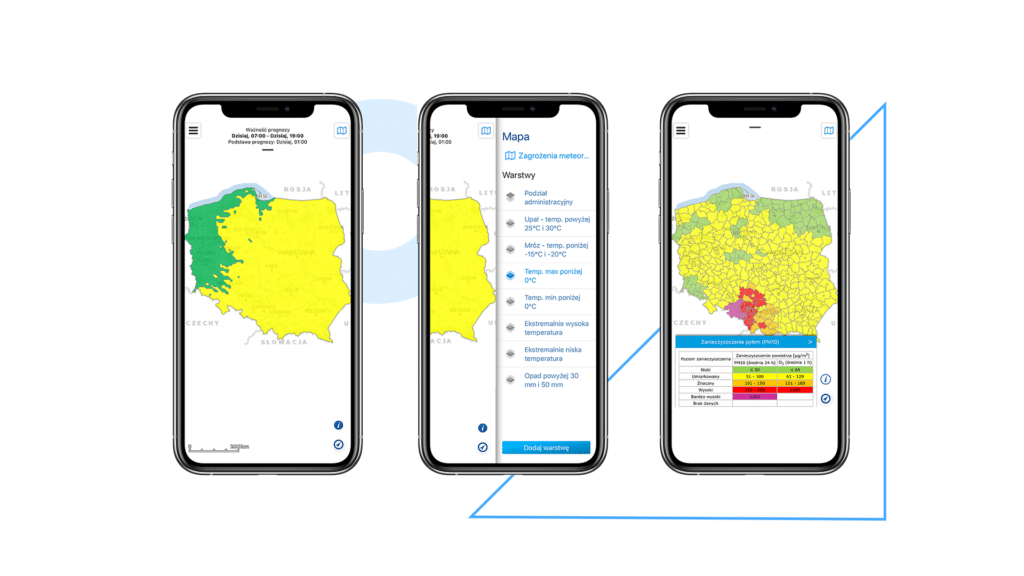
The system would send messages to public administration units and citizens after identifying a threat based on its integrated database and information distribution module, adapted to most modern devices. Stermedia was responsible for implementing the notification module and ensuring reliable, large-scale message delivery as part of this custom emergency management software development project.
The main technical challenge was to achieve the fastest possible delivery of information via SMS to 2–3 million recipients as part of a nationwide emergency management system.
Benefits of a Custom Emergency Management System
The main benefits of system implementation are:
- reducing losses after flood events through faster and more accurate alerts,
- identifying areas particularly threatened by flooding based on real-time data,
- enabling informed investment decisions based on reliable data related to environmental events,
- improving the effectiveness of crisis management systems at all levels of government administration.
Results of the Nationwide Emergency Management System
As a result of the work of the Stermedia team, more than 3 million citizens in Poland are covered by a nationwide early warning system. Messages about potential threats must reach recipients as quickly as possible while appearing simultaneously on the ISOK public portal.
The system delivers notifications via multiple channels, including mobile devices, email, and browser-based pop-up alerts, ensuring broad accessibility and reliability.
The solution is based on a distributed architecture ensuring high availability and performance. In the ISOK project, one service receives threat notifications from the database and places them in a message queue. Another service then retrieves these messages and distributes them through appropriate notification channels.
This approach prevents downtime and ensures that critical information reaches recipients quickly and reliably.
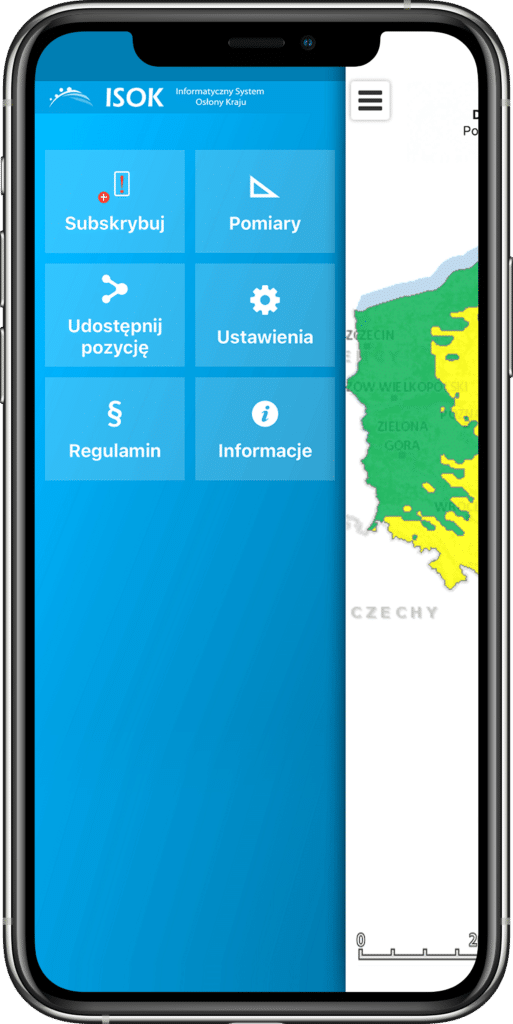
An additional outcome of the development work was a flexible subscription module allowing users to customize received notifications based on:
- geographic areas (poviats and voivodeships),
- types of threats (e.g. floods, smog, hail),
- preferred delivery channels (telephone, email, browser notifications).
Notifications prepared by Stermedia are delivered to mobile devices supporting iOS, Android, and the former Windows Mobile platform. Alerts are also sent via email and displayed as browser push notifications.
To ensure reliability, messages are routed through backup servers if an email provider is unavailable. In order to increase security and guarantee efficient delivery, system servers are deployed both locally and abroad.
Browser-based notifications are available to registered users of the ISOK portal. After registration, users can select their email address, geographic area, and preferred types of alerts to receive detailed, location-specific threat information.
Results
- nationwide early warning system covering over 3 million citizens,
- notifications delivered to mobile devices,
- reliable message delivery supported by backup servers,
- browser-based notifications available to registered users.
TECHNOLOGIES
- Docker
- Java
- Apache Kafka
- Oracle
- Apache Solr
- Spring Framework (Pivotal)
Next Steps
This case study demonstrates how a large-scale emergency management system can support public administration and millions of citizens through reliable, real-time communication.
If you are interested in how similar technologies are applied across other public-sector and mission-critical systems, explore the following resources:
- AI Solutions: Correspondence Automation at a City Office – See how AI-driven correspondence automation improves efficiency and reliability in city offices facing large volumes of daily communication.
- Revolutionizing Public Health with AI and ML. Sanitary Inspection Case Study – Discover how AI and machine learning help public health institutions detect risks earlier and manage safety at scale.
- AI Consulting and Integration as a Business Strategy – Learn how organizations turn AI initiatives into scalable, long-term systems aligned with real business and operational goals.
Are you inspired?
Let’s talk about your idea.
Let’s talk