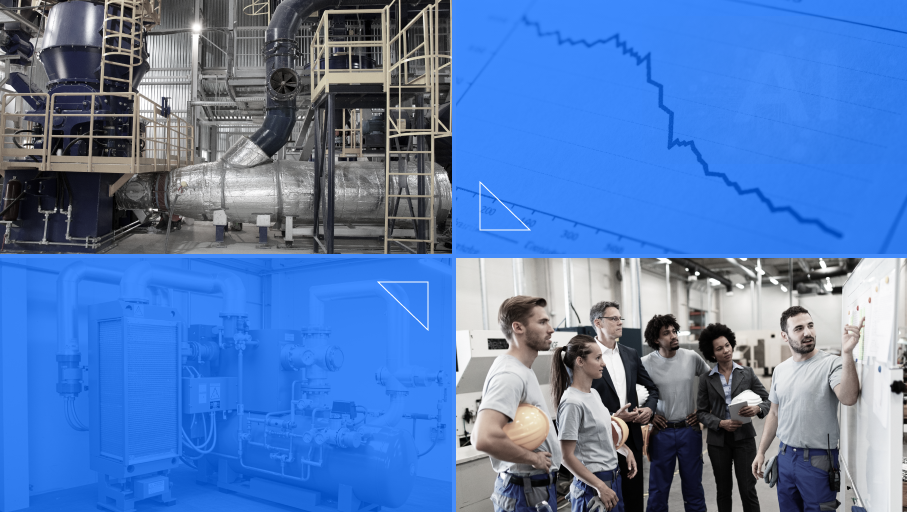
Predictive Quality Control for Automotive Manufacturing
Predictive quality control helps automotive manufacturers identify potential errors in the early production process before they affect quality. Volkswagen, a global giant in the automotive industry, came to Stermedia for the fourth time to optimize production processes using artificial intelligence mechanisms. The customer needed a way to determine the suitability of individual measuring devices and a system that informs teams about potential errors in the early production process.
How Predictive Quality Control Works in Production
Production teams inspect all car components many times at various stages of production. Each production line has its own specificity. For example, in a welding shop, the process shapes the geometry of the car. The team then checks the obtained product against its model version. This quality control process verifies the location of sensitive points, such as bolt fastening or sheet metal bending.
Quality Standards and Early Production Error Detection
After the entire process, experienced specialists run thorough tests on the finished car. They determine whether the car meets strict quality standards. When they find irregularities, the team must repair the defective component. The company needed more dynamic component quality testing cycles. For example, in a welding shop, a hole prepared for a lamp may be too small. Without early production error detection, the team may find this issue only at the assembly plant. That is far too late. For this reason, the manufacturer collects as much information as possible during production in the form of intermediate measurements.
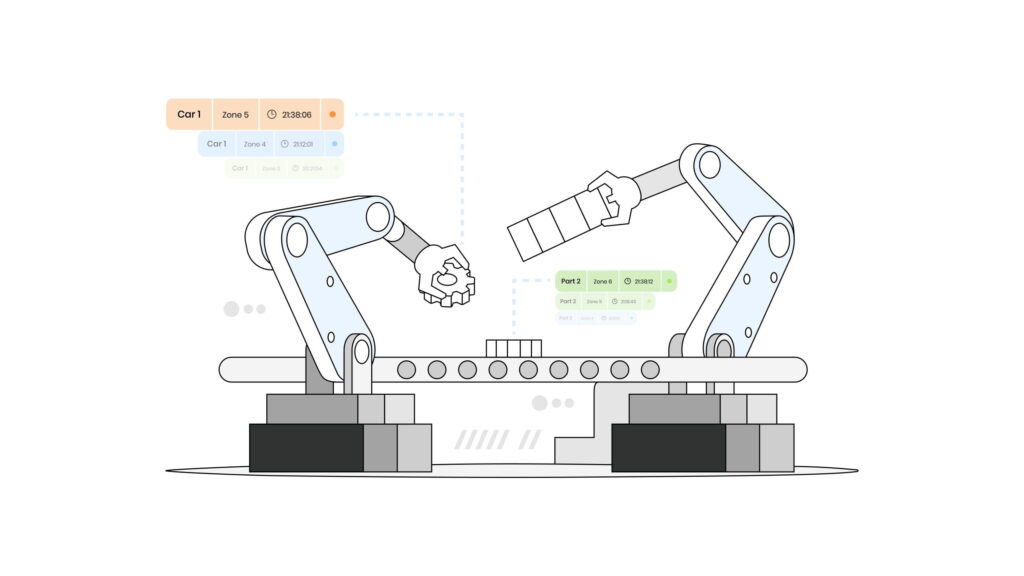
The complete predictive quality control solution consists of two stages:
- Measurement point analysis. This stage answers the question of which measuring points have the greatest utility. It also indicates the potential occurrence of errors.
- An automatic system that creates decision models. Based on effective measuring points, the system creates a predictive model for manufacturing. It informs teams in advance about potential errors and allows them to act quickly. This translates into material savings and less workload.
Client Request for Manufacturing Quality Control
The Stermedia AI team received historical data from the production line. The dataset included car measurement data and observed errors. Maciej Pawlikowski, Data Scientist at Stermedia said:

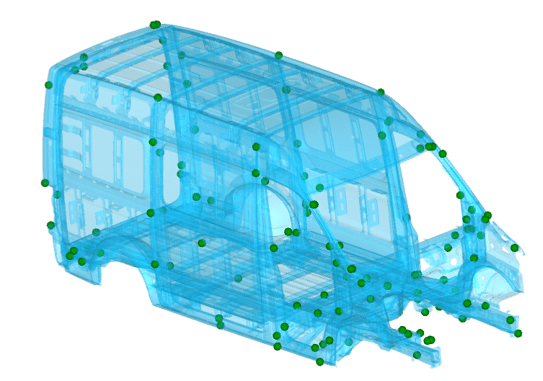
Measurement information came from over 160,000 measurement points. The analysis also showed high variability in data quality. Missing measurements for some cars created a particular challenge.
Maciej Pawlikowski, Data Scientist, Stermedia
To get the best performance, Stermedia defined the project as a tool for creating new AI models on request. The tool needed to support any type of error based on the input data. This data consisted of car indexes with information about the occurrence of a modeled error. The tool had to select the right measurement points independently and create the optimal model for predictive quality control.
The AI quality control tool is based on two pillars:
- Automatic feature selection
- Machine learning and effectiveness testing
Automatic Feature Selection for Predictive Quality Control
- How to choose features?
The team selected features based on statistical analysis. Stermedia data scientists chose a recursive selection approach. The process starts with all possible measurement points. Then, it rejects points with negligible significance for the modeled problem. As a result, only the essential points remain. This is the elimination method.
For example, when the team models the correct position of the glass, the elimination method can exclude points that determine the corrugation of the trunk plate. These points do not affect the glass. However, the setting of the mainframe at the rear of the car may still support the model, even though it seems distant. Incorrect stress transmission is one example.
Machine Learning for Manufacturing Error Prediction
- How to choose a model?
At this stage, the tool already knows which measuring points are relevant to the modeled problem. The model uses these points to decide whether an error occurs or not.
In an earlier broad analysis, the team selected several artificial intelligence model configurations. These models performed well for the analyzed issues. Then, the team tested each prepared architecture on the received data. Based on the results, they selected the model that worked best.
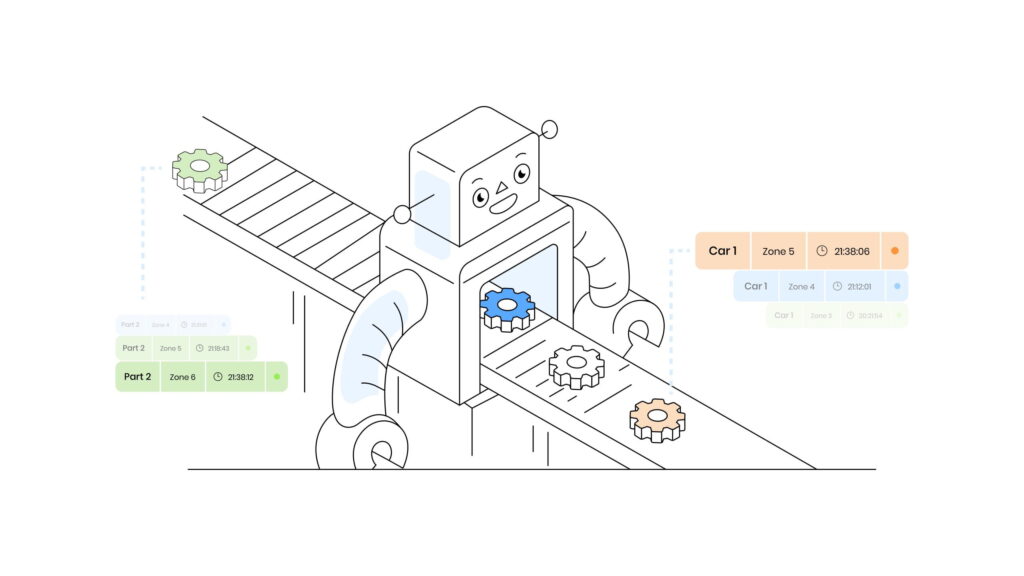
The application interface also allows the user to define a custom list of measuring points. This helps production experts confirm specific hypotheses.
Classification Models for AI Quality Control
The team tested several classification models, including XGBoost, SVM, logistic regression, Random Forest, and Gaussian Process Classifier.
Results: Predictive Quality Control Tool for Production Teams
As a result, the client received a predictive quality control tool. The tool allows the team to analyze measuring points, learn their predictive value, and create predictive models based on selected points. These models provide information about possible problems that teams can remedy in a timely manner.
Are you inspired?
Let’s talk about your idea.
Let’s talk
Next steps & further reading
To explore how predictive quality control can improve early production error detection, the best starting point is a small, controlled pilot based on real production data.
At Stermedia, we help CEOs, startups, and established organizations turn AI ideas into working products. We support every stage, from needs analysis and proof of concept to production deployment.
Want to discuss your project? Contact our AI team
Continue reading:
- Machine Learning in Manufacturing for Car Factories — a related automotive case study showing how ML improved material consumption prediction in car production.
- Computer Vision in Manufacturing: A Practical Guide — a practical overview of how visual AI supports quality control and production processes.
- Why Quality Assurance is Essential in AI Projects — further reading on QA, model reliability, and risk reduction in AI-based systems.